How to clean a deck in Nova Scotia
Salt air, wet springs and five months under snow. Here is how deck cleaning actually works here, and what to check while the boards are clean.
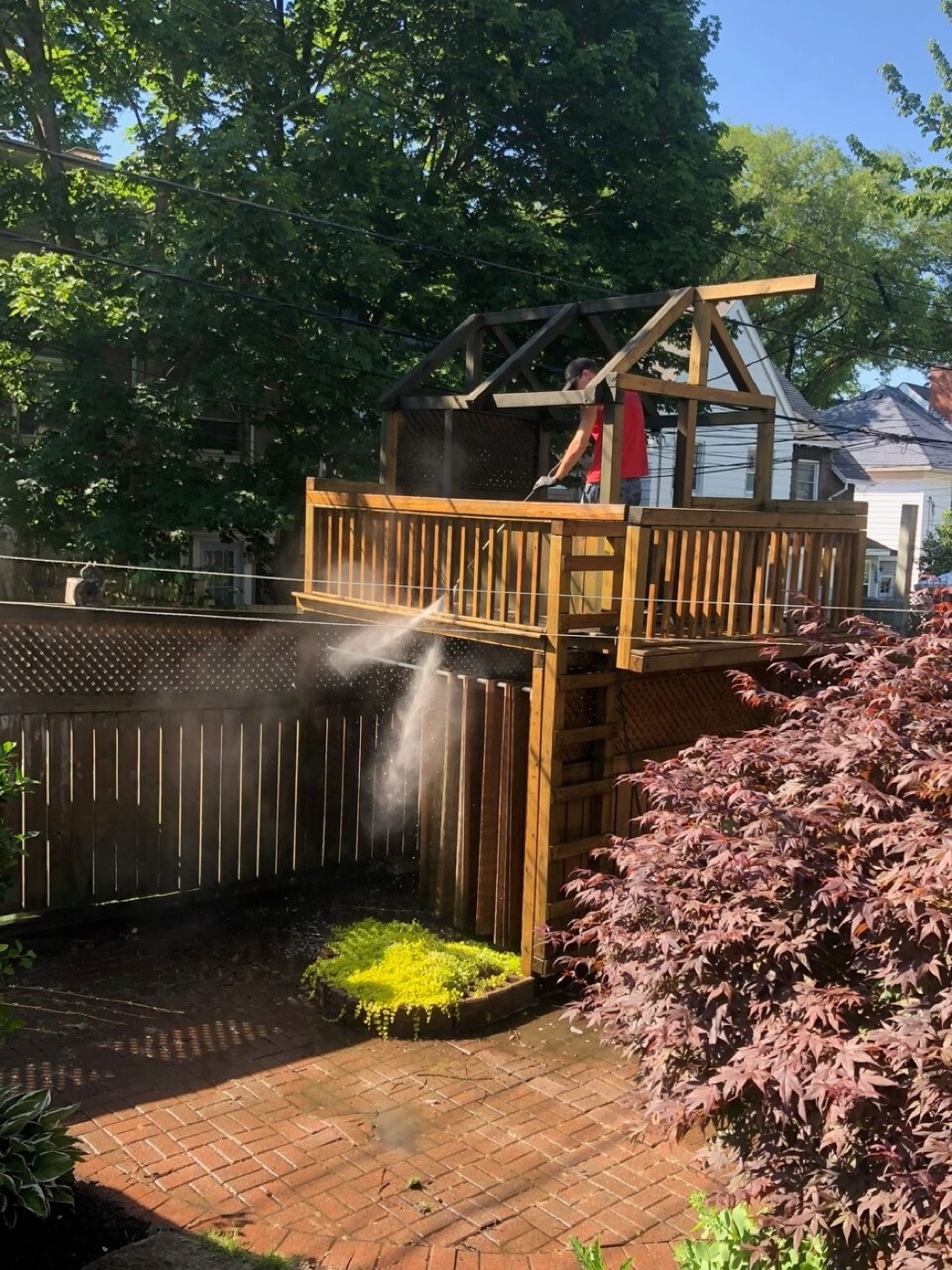
A deck in Nova Scotia takes a beating. Salt air, wet springs, shade that never really dries out, and five months a year under snow. Left alone, that green film turns the boards slick enough to put someone on their back.
Why decks go green here
That green or black coating is not dirt. It is algae, mould and mildew growing in the wood, and this province gives it everything it needs. Long wet springs, humidity off the water all summer, and a lot of yards where the deck sits in shade half the day. North facing decks and anything under trees go first.
It matters for two reasons. It is slippery when wet, which is how people get hurt. And it holds moisture against the wood, which is how boards start to rot from the top down.
When to do it in this province
Late April into June is the window. The deck has dried out from winter, last season's growth is still there, and you have the whole summer ahead of you once it is done. September also works if you missed spring, mainly because it means you are not sealing a season of growth in under the snow.
Avoid a cold snap. Washing when it might freeze overnight forces water into the grain where it expands. That is how you get splitting and raised grain. There is more on timing in our piece on when to wash your house in Nova Scotia.
Pressure is not the answer
This is where most DIY deck jobs go wrong. A pressure washer at full tilt will absolutely strip the green off. It will also tear up the surface of the wood. Softwood decking, which is most of what is out there, is soft enough that a narrow tip held too close carves visible lines into the boards. Once the grain is furrowed it holds more water and more dirt, so the deck gets dirtier faster from then on.
Composite is worse. Too much pressure can permanently mark the surface and most manufacturers will void the warranty over it. The right approach is chemistry first, pressure second. A cleaning solution kills the growth, then low pressure rinses it away. You are washing the deck, not sandblasting it. It is the same logic behind soft washing siding.
Doing it yourself
If you are taking it on, in this order:
- Clear everything off and sweep out the gaps between boards. Wet debris left in there stains.
- Wet down the plants around the deck first, and again after. Most deck cleaners are hard on landscaping.
- Apply the cleaner and let it sit. Follow the label for dwell time, and do not let it dry on the wood.
- Rinse at low pressure, wide tip, kept moving, working with the grain rather than across it.
- Let it dry fully before you stain or seal.
Keep the tip well back from the wood. If you can see the water carving a line, you are too close.
What to check while it is clean
A clean deck is the easiest time to spot the things that cost real money later.
- Soft spots. Press a screwdriver into boards near the posts and where the deck meets the house. If it sinks in, that is rot.
- The ledger board, where the deck attaches to the house. This is the connection that fails when decks collapse. Look for rust, missing fasteners or water staining behind it.
- Popped fasteners. Nails backing out means boards are moving.
- Railings. Grab them and pull. They should not flex.
None of that is a cleaning job, but it is a lot cheaper to find in May than to find the hard way.
Cleaning, staining and sealing are three different things
People use these interchangeably and they are not. Cleaning removes the growth and dirt. It does not protect anything. Staining adds colour and some UV protection, and it has to go on clean dry wood or it seals the dirt in. Sealing is the water barrier, and some stains include it while others do not.
If your deck has never been treated, cleaning alone will make it look dramatically better for a season. If you want it to stay that way, cleaning is step one of three, not the whole job.
When to get someone in
- The deck is high, on a slope, or you would be working off a ladder
- It is composite, or an expensive hardwood you do not want to risk
- It has never been done and there are years of growth on it
- You do not own a washer and were about to rent one for the day
We bring our own water, which is worth knowing. No hose to run, no tap to find, nothing on your water bill, and it means we can do a deck at a cottage or anywhere the water is shut off. The products we use will not harm your plants, your grass or your animals.
We clean decks across Halifax, Dartmouth, Bedford, Cole Harbour and the rest of the HRM. More on how we do it on the deck cleaning page. Send a couple of photos and roughly how big it is and we will tell you what it takes. We have been doing this since 1997, so we have seen what your deck is doing before.