Power washing, pressure washing and soft washing: what is the difference?
People use these three terms as if they mean the same thing. They do not, and picking the wrong one is how siding gets wrecked.
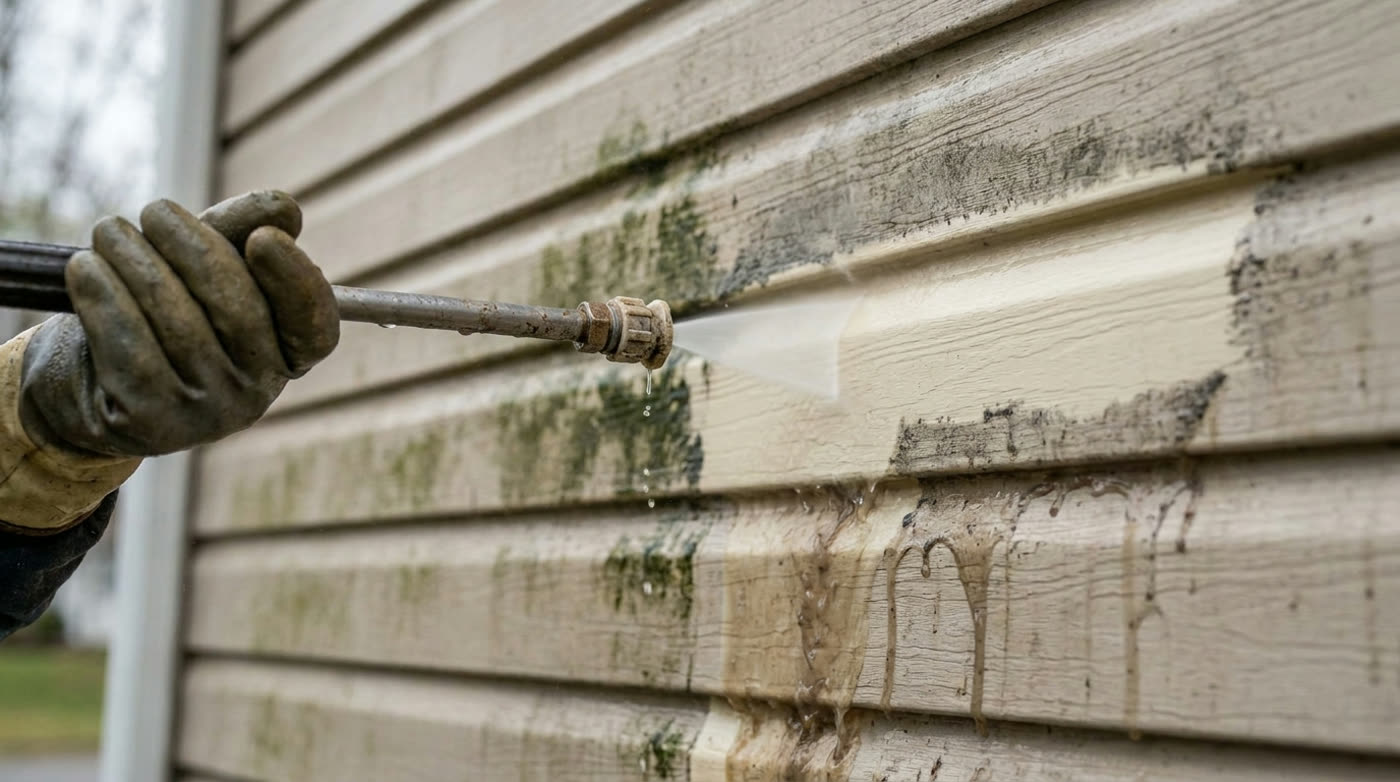
Ask three companies and you will get three answers, largely because the terms get used loosely in marketing. Here is the practical version, which is the one that matters when someone is standing at your house with a wand.
Pressure washing
Cold water at high pressure. The force does the work. It is the right tool for hard, durable surfaces, concrete, masonry, steel and heavy equipment, where there is caked material that needs to be physically removed and the surface underneath can take it.
Power washing
The same thing, but the water is heated. Heat is what makes the difference on grease, oil and anything petroleum based, which is why it comes up constantly on equipment, shop floors and fleet work and almost never on the side of a house.
Soft washing
Low pressure, and the cleaning product does the work instead of the force. This is what siding, painted surfaces, cladding and older wood actually want. The growth is treated and lifted rather than blasted, so nothing gets driven into the surface.
Why the wrong choice causes damage
Two things go wrong when siding gets treated like concrete. First, high pressure aimed upward gets water in behind the boards, where it has no easy way out and no sun to dry it. Second, the surface itself takes a beating, and on vinyl or paint that shows up as chalking, streaking and dulled colour.
On wood it is worse, because wood is soft. Too much pressure tears the grain up and leaves tracking across the boards that cannot be washed out afterward. It has to be sanded.
The green on your house is not really dirt
This is the part that explains why soft washing wins on a house. That grey green film on the shaded wall is biological growth, not a layer of grime. Blasting it removes what you can see and leaves what you cannot, so it comes back quickly. Treating it properly is what makes the wash last.
So which one does your job need?
- Concrete, masonry, steel and heavy equipment: pressure, and heat if there is grease
- Fleet vehicles and shop surfaces: usually heated, because of the oil and road film
- Vinyl, wood and painted siding: soft wash
- Decks and fences: low pressure and care, because the wood is soft
- Anything you are about to paint or stain: prep, which is its own job
The short version is that a company should be choosing the method based on what your surface is, not based on what is already hooked up on the truck.