When to wash your house in Nova Scotia
Timing matters more here than it does most places. Here is the window that works, the one that causes damage, and how often each surface needs it.
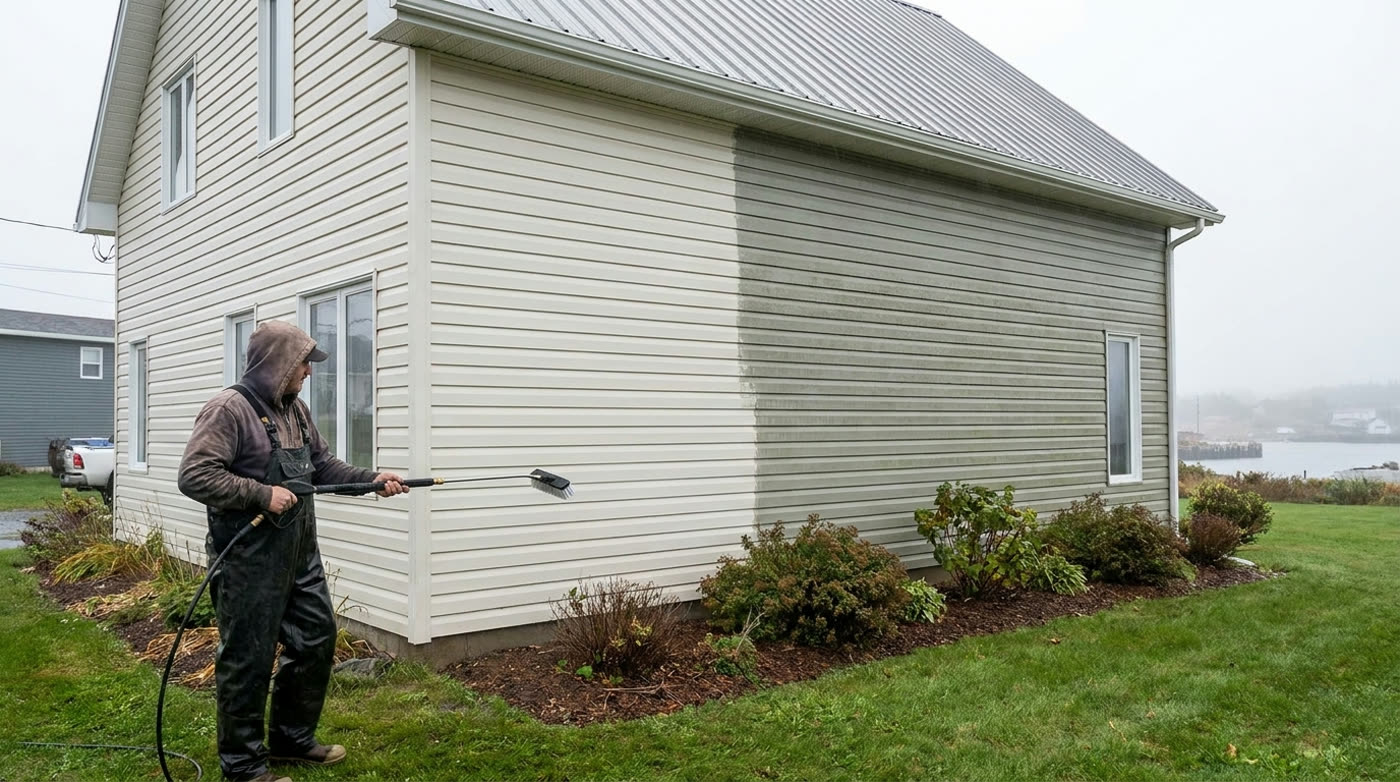
Most people think about washing the outside of the house when they look at it and it annoys them. That is usually July, when it is hot, the sun is straight on the wall and it is close to the worst time to do it.
This climate is hard on the outside of a building. Long wet springs, humidity off the water all summer, salt air if you are near it, and five months under snow and road salt. Timing the work around that is most of the difference between a wash that lasts and one that does not.
The window that works: late April into June
Spring is the right answer for nearly everything. The winter growth is on there and still soft, the freezing is done, and you get the whole summer out of the job once it is finished. If you are staining a deck or painting, this also gives you the dry stretch afterward that the coating needs.
September is the runner up
If spring got away from you, early fall works. Cleaning before winter means you are not sealing a full season of algae under the snow, and it is easier on a surface that is about to sit wet for months. Leave enough margin before the first hard frost.
When not to do it
Avoid anything close to freezing. Washing when it might go below zero overnight drives water into wood grain and masonry where it expands, and that is how you get splitting and spalling. In this province that rules out a fair bit of November through March.
Avoid full midday sun on the wall you are working on. Cleaning solution that dries on a hot surface before it is rinsed leaves streaking, and on some surfaces it will not come back off. That is why a July afternoon on a south facing wall is the wrong call even though it feels like the right one.
How often each surface actually needs it
Exposure matters far more than age. A north facing wall under trees that never gets direct sun will go green in a couple of years. A south facing wall in the open can go three or four. Look at the shaded side of your house, that is the one that tells you where you are.
- Siding: every one to two years, shorter if you are shaded, treed or near the water
- Decks and fences: yearly, and always before staining
- Driveways and walkways: every two to three years, or when they go green and slippery
- Commercial buildings and fleets: on a schedule, because it is about how the place looks to customers
Salt air is its own problem
If you are close to the water you already know your place gets dirty faster than the same house inland. Salt holds moisture against the surface and it accelerates corrosion on anything metal, from railings to fasteners to equipment left outside. Coastal properties generally want the shorter end of every interval above.
Booking around the weather
Spring books up. Everybody looks at their house the same week the weather turns, and that is the week the phone does not stop. If you know you want it done in May, the time to sort it out is now rather than then.
If you are not sure what your place needs or when, send a couple of photos of the worst side and we will tell you straight, including if it can wait a year. We have been doing this in this climate since 1997.